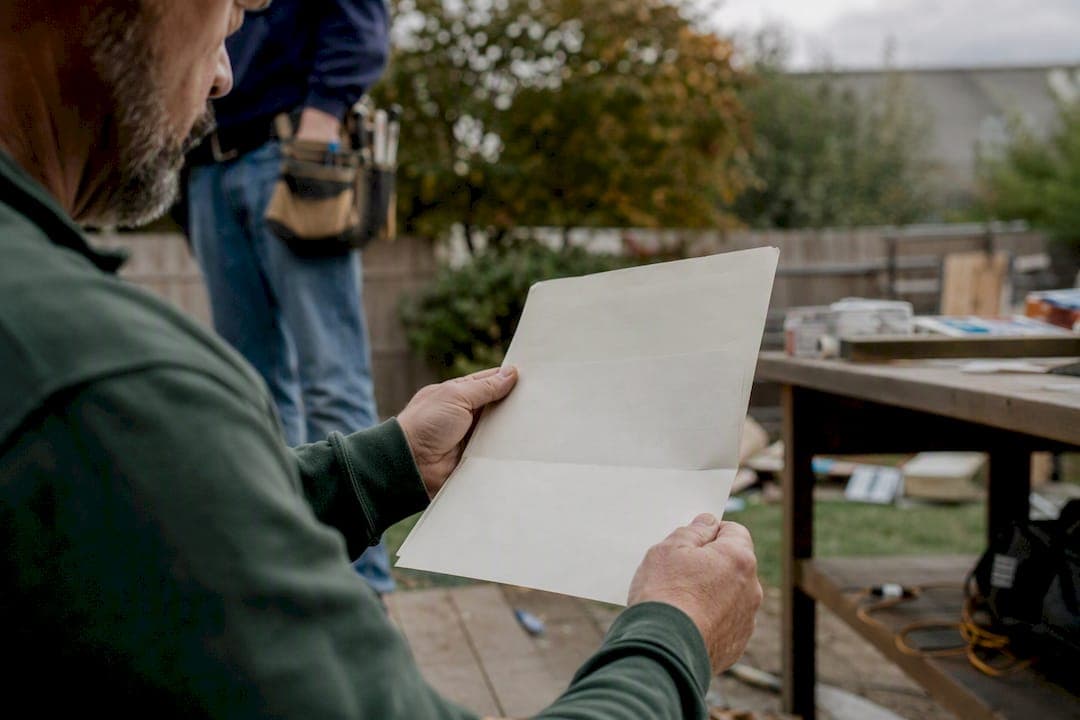
Don't hire a contractor who just tells you they're insured. Get a Certificate of Insurance sent directly from their agent or carrier, not a screenshot or a PDF the contractor emails you themselves, and call the insurer to confirm the policy is active. If the project involves subcontractors, ask to be named an additional insured and request that coverage matches on their end too.
TL;DR:
- Confirm that the certificate of insurance is directly sent from the insurer or agent, not the contractor, to prevent editing or fraud.
- Verify the named insured matches the legal business name on your contract and ensure all coverage types are current and extend through your project's duration.
- Call the carrier using a independently found phone number to confirm the policy's active status, coverage details, and appropriate endorsements, especially for additional insured status.
- Require the contractor to provide COIs from all subcontractors, and ensure coverage extends to your job site, not just their main office.
- Keep all insurance documentation updated, note renewal dates, and request proof of renewal before policies expire during your project.
Table of Contents
- How Do You Verify Contractor Insurance Step by Step?
- What Does a Certificate of Insurance Actually Show?
- How Do You Confirm a Policy Is Real and Active?
- What Insurance Limits Should Homeowners Require?
- What Are the Red Flags and What Should You Ask?
- How Long Should You Keep Insurance Records?
- How a Responsible Contractor Handles Insurance Verification
- Ready to Work With a Fully Insured Contractor?
- A Note on Protecting Your Investment
- Sources
How Do You Verify Contractor Insurance Step by Step?
Verifying contractor insurance isn't one phone call. It's a short sequence of checks that turns a claim into proof, and each step closes a gap the last one leaves open.
- Request the COI from the source, not the contractor. Ask the contractor for their agent's or carrier's contact information, then have the certificate of liability insurance sent to you directly. A document forwarded by the contractor can be edited.
- Check the named insured against the contractor's legal business name. If the COI lists "Smith Construction LLC" but you signed a contract with "Smith Home Solutions Inc," that's a mismatch worth questioning before anything else.
- Confirm policy dates and coverage types. General liability, workers' compensation, commercial auto, and umbrella coverage (if the project size calls for it) should all show current effective and expiration dates that cover your entire project timeline.
- Ask for additional insured endorsements and cancellation notice language. These are separate documents from the COI itself, and a legitimate insurer or agent can produce them on request.
- Call the carrier or producer using a phone number you found independently. A four-step process like this, request, check, confirm subs, call the carrier, is what separates a real verification from a rubber stamp.
- Collect COIs from every subcontractor and confirm their coverage extends to your job site, not just their home office.
- Set a calendar reminder for renewal dates if your project runs longer than a typical policy term.
Pro Tip: Ask the contractor's agent to email the COI to you directly instead of routing it through the contractor. Legitimate agents do this routinely, and hesitation on this point alone tells you something.
What Does a Certificate of Insurance Actually Show?
Most COIs follow the ACORD 25 format, an industry-standard layout, so once you know where to look, you can scan one in under two minutes.
- Producer is the insurance agency that issued the certificate. Named insured is the contractor's legal business entity.
- NAIC number identifies the specific carrier, useful for cross-checking against state insurance department records.
- Policy numbers, effective dates, and expiration dates appear in a grid for each coverage type.
- General liability (GL) covers property damage and injury claims. Workers' compensation and employers' liability cover injuries to the contractor's own crew. Commercial auto covers vehicles used on the job. Umbrella adds a layer above the base limits.
- Certificate holder is just you, listed for notification purposes. Additional insured is a legal status that actually extends coverage to you, and it only exists through a specific endorsement.
That last distinction trips up more homeowners than any other line on the page. Being named a certificate holder gives you notification rights only; it does nothing to protect you if a claim arises. To get real protection, you need an endorsement like CG 20 10 (ongoing operations) or CG 20 37 (completed operations), plus language for "primary and noncontributory" coverage and a waiver of subrogation.
How Do You Confirm a Policy Is Real and Active?
A COI is a snapshot taken the day it was printed. It tells you nothing about whether the policy still exists next week, which is why calling the carrier directly to confirm the policy is active matters more than the document itself.
- Look up the carrier's phone number yourself. Never call a number printed on the COI; fraudulent certificates often list a number that routes to an accomplice, not the actual insurer.
- Check the NAIC database to confirm the carrier is licensed to operate in your state.
- Check the carrier's A.M. Best rating. An A- or better is the general industry benchmark for financial strength.
- On the call, ask specifically: is this policy number active, does it cover the named insured on the COI, does it cover your project address, and are the additional insured endorsements actually in force?
Pro Tip: If a contractor's COI looks freshly printed the same week you asked for it, or the fonts and formatting look slightly off from a standard ACORD form, treat that as a reason to call the carrier before you do anything else.
What Insurance Limits Should Homeowners Require?
Coverage limits should scale with project risk, and a kitchen refresh doesn't carry the same exposure as a two-story addition.
- General liability: $1,000,000 per occurrence and $2,000,000 aggregate is a widely used baseline for residential remodeling work.
- Commercial auto: $1,000,000 combined single limit is a common standard when contractors drive vehicles to and from your property.
- Workers' compensation: Confirm it's active for anyone working on site. Workers' comp is what keeps you from becoming financially responsible for an on-site injury if the contractor doesn't have it, so this isn't optional.
- Umbrella or excess coverage: Ask for it on larger projects, like ADU builds or full additions, where a serious accident could exceed base limits.
- Carrier strength: An A.M. Best rating of A- or higher reduces the risk that a carrier can't pay out on a large claim.
What Are the Red Flags and What Should You Ask?
Some warning signs show up before you even request documentation, and a contractor's reaction to your questions often tells you more than the paperwork itself.
Watch for: refusal to have the agent send the COI directly, screenshots instead of originals, a business name on the COI that doesn't match your contract, a policy expiring before your project ends, or subcontractors with no coverage of their own.
- Ask the contractor: "Can your agent send the COI directly to me? Who's the carrier, and what's the policy number?"
- Ask the insurer: "Is this policy active? Does it cover the named insured and my project address? Are the additional insured endorsements in force?"
- If you hit resistance, pause the hiring process, run the question by your own homeowner's insurance agent, or move on to a different contractor.
How Long Should You Keep Insurance Records?
Keep every COI and endorsement in one folder, physical or digital, and note expiration dates on a shared calendar the moment you receive them.
- Build cancellation notice language into your contract so you're alerted if coverage lapses mid-project.
- Require proof of renewal before the current policy expires, especially on multi-month jobs.
- Repeat the carrier verification call whenever a policy renews or an endorsement changes during a long project.
How a Responsible Contractor Handles Insurance Verification
HN Construction & Remodeling sends COIs through its agent, not through office staff forwarding a PDF, and tracks its own policy renewal dates the same way it asks homeowners to. Every subcontractor on a job provides a matching certificate before setting foot on site, and additional insured endorsements go out on request, along with direct carrier and producer contact information. Any contractor worth hiring should be this transparent without you having to push for it.
Ready to Work With a Fully Insured Contractor?
Once you know what to look for, choosing a contractor gets a lot less stressful. HN Construction & Remodeling gives Austin and Dallas homeowners exactly the paperwork this guide walks through: agent-sent COIs, current endorsements, and straight answers about carriers and coverage, no chasing required.
If you're planning a kitchen or bathroom remodel, browse the gallery of completed projects to see the kind of work backed by that coverage, or go straight to the kitchen and bathroom remodeling page to start a conversation. Ask for the COI, the endorsements, and a written contract that mirrors everything covered here, and request a couple of references while you're at it. A contractor confident in their coverage will hand all of it over without hesitation.
A Note on Protecting Your Investment
Verification isn't about distrust. It's about turning a verbal promise into something you can actually rely on if a job goes wrong. I'd treat an agent-confirmed COI and a signed additional insured endorsement as the minimum bar, not an extra step. Homeowners who make that one phone call to the carrier protect themselves far better than any contract clause alone ever could.
— Atlas
Sources
- How to Read a Contractor's Certificate of Insurance (COI): A GC's Verification Guide | SiteVetter
- How to Verify If Your Contractor Has the Right Insurance | New Hampshire Insurance Department
- Verify a contractor's insurance yourself — ProFix Directory
- Insurance Verification Checklist - buildquest
- Verify a Contractor, Tradesperson or Business | L&I (WA)